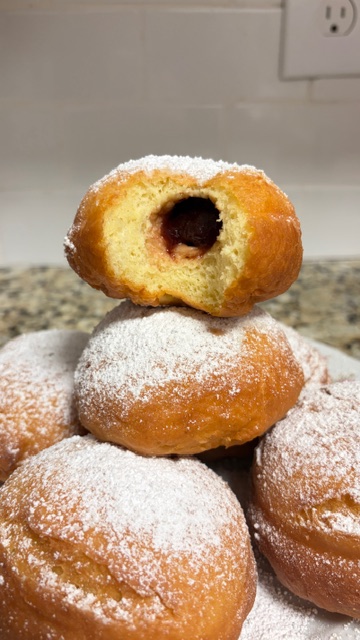
My Babcia’s Homemade Pączki (Polish Donuts)
Some recipes are more than just recipes — they are living memories you can taste. I am beyond excited to share this recipe with the world as it’s truly such a special one to me. These are my Babcia’s Homemade Pączki, the Polish donuts that fill our kitchen with warmth and the smell of sweet yeast dough rising on the counter.
Making pączki in our family is never rushed. Babcia lines everything up carefully: the flour in the biggest bowl, egg yolks separated one by one, fresh yeast blooming in warm milk. She still reminds me that dough isn’t just mixed — it’s felt. It needs to be soft but not sticky, elastic but not stiff. We knead it side by side, dusting in a little more flour when needed, working it until it becomes smooth and pillowy under our hands.
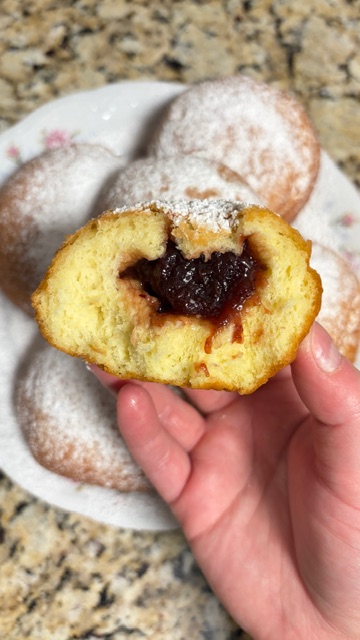
What makes these pączki truly special is their richness. They use only egg yolks, which gives them that deep golden color and tender, almost brioche-like crumb. A splash of vodka — a classic Polish trick — keeps them from absorbing too much oil while frying. And the filling? Always generous. Rosehip, plum, or raspberry marmalade are traditional in our kitchen.
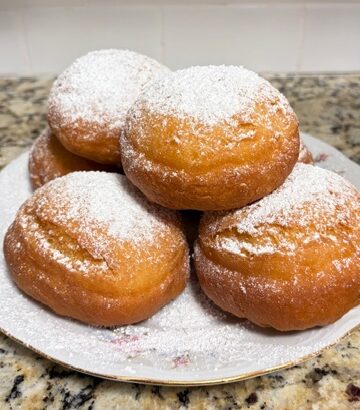
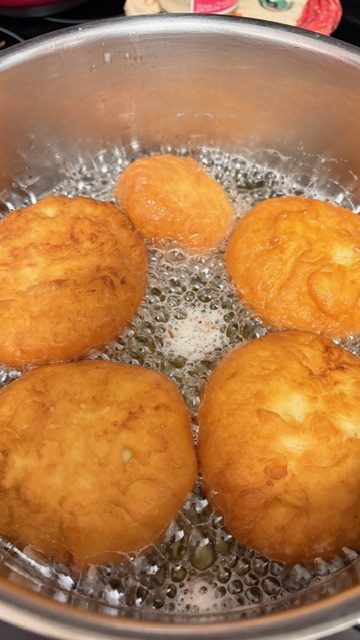
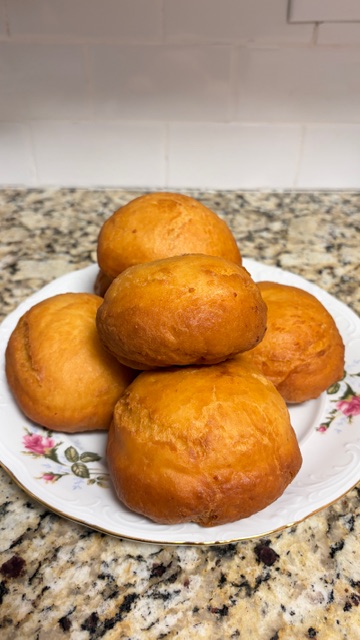
When they come out of the oil, perfectly golden and puffed, we lay them on paper towels and wait just long enough so we don’t burn our fingers. Then comes the heavy snowfall of powdered sugar. The outside is lightly crisp, the inside soft and airy, and the jam is warm and vibrant. These aren’t just donuts. They’re tradition we continue together, one batch at a time.
Why These Are the Best Pączki
- Ultra rich and tender thanks to seven egg yolks — they’re soft and almost custardy inside.
- Perfectly balanced sweetness with lightly sweet dough and generous jam filling.
- Golden, not greasy because of the vodka trick that prevents excess oil absorption.
- Authentic, heritage-driven flavor made the traditional Polish way — by hand.
What You’ll Need
- All-purpose flour – Provides the structure and chew needed for a classic yeast dough.
- Granulated sugar – Sweetens the dough and helps create a golden crust when frying.
- Salt – Balances sweetness and enhances overall flavor.
- Fresh yeast – Gives the dough its beautiful rise and airy texture.
- Milk (in yeast + dough) – Activates the yeast and keeps the dough soft and enriched.
- Unsalted butter – Adds richness, moisture, and that classic buttery flavor.
- Egg yolks – Create a deeply tender, golden interior and rich taste.
- Vanilla extract – Adds warmth and depth.
- Vodka – Reduces oil absorption during frying for lighter donuts.
- Jam or marmalade – The signature filling; traditional flavors like rosehip, plum, and raspberry bring authenticity.
- Neutral oil – Ensures clean frying without overpowering flavor.
- Powdered sugar – The classic finishing touch.
How to Make the Best Pączki
- Make sure your yeast mixture is foamy before using — that means it’s active.
- Don’t overheat the milk and butter mixture — warm, not hot.
- Knead until the dough no longer sticks to your hands.
- Seal the marmalade filling tightly to prevent leaks while frying.
- Maintain oil temperature around 350°F (175°C) for even cooking.
Extra Tips
- Use a kitchen thermometer for frying — temperature control is key.
- Fry in small batches to avoid dropping the oil temperature.
- Let them cool slightly before dusting with powdered sugar so it doesn’t melt instantly.
- If one leaks marmalade while frying, don’t panic — it still tastes incredible.
My Favorite Tools for Making Homemade Pączki
This post contains Amazon affiliate links, which means I may earn a small commission at no additional cost to you. Using my links helps support Bonia Bakery and allows me to continue creating and sharing free recipes with you.
Digital Kitchen Scale – For accurately measuring your ingredients, especially the flour, for perfectly soft and fluffy pączki every time.
Mixing Bowls – A good set of mixing bowls makes prepping the dough and organizing ingredients so much easier.
Large Heavy-Bottomed Pot – You’ll want a deep, sturdy pot for safely frying the pączki and maintaining an even oil temperature.
Deep-Fry Thermometer – Keeping your oil at the proper temperature is one of the biggest secrets to pączki that are beautifully golden on the outside without becoming greasy.
Spider Strainer – Perfect for gently lowering the pączki into the hot oil and lifting them out once they’re golden brown.
Ingredients
(Yields around 20 small donuts or 10-12 larger ones)
For the Dough:
- 6 cups all-purpose flour (750 g)
- 1 teaspoon salt (6 g)
Pre-Risen Yeast Mixture:
- 100 g fresh yeast
- 50 ml milk (50 g)
- 1 tablespoon sugar (12 g)
Remaining Dough Ingredients:
- 480 ml warm milk (480 g)
- ⅔ cup unsalted butter, melted (150 g / about 10 tablespoons)
- 7 large egg yolks (about 120 g total)
- ¾ cup granulated sugar (150 g)
- 2 teaspoons vanilla extract (10 g)
- 1 shot vodka (30 ml)
For Frying:
- 1 full container vegetable oil (about 1.5–2 liters / 6–8 cups)
(Canola or any neutral oil works. We use vegetable.)
For Filling:
- 3–4 cups marmalade or jam (900–1200 g)
(Rosehip, plum, or raspberry.) - ( We use marmalade as it tends to hold its shape better than jam when fried. Jam is a more runny consistency while marmalade is not.)
For Topping:
- 1 cup powdered sugar (120 g)
Directions
- Prepare the yeast mixture.
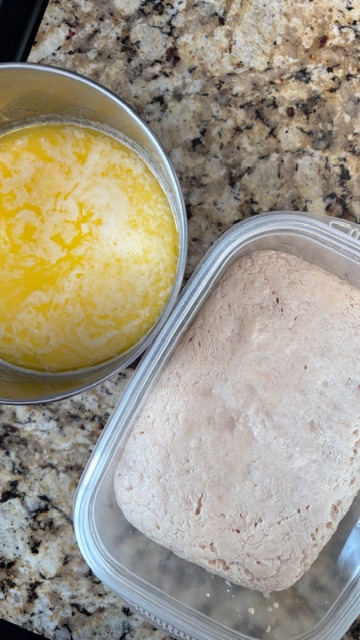
Combine fresh yeast, 50 ml milk, and 1 tablespoon sugar in a bowl. Let sit until foamy and risen. About 20 minutes or so. (Pictured on the right hand side below) - Warm the milk and butter.
In a saucepan over medium-low heat, combine 480 ml milk and butter. Heat until butter is fully melted and mixture is warm (not hot). Remove from heat. (Pictured on the left hand side below.)
3. Mix dry ingredients.
In a large bowl, whisk together flour and salt and set aside.
4. Beat egg yolks.
In a stand mixer with paddle or whisk attachment, beat egg yolks with the sugar for several minutes until slightly pale and thickened.
5. Combine dough.
Add egg mixture to flour mixture. Add risen yeast mixture. Pour in warm milk and butter mixture, along with the vanilla and vodka.
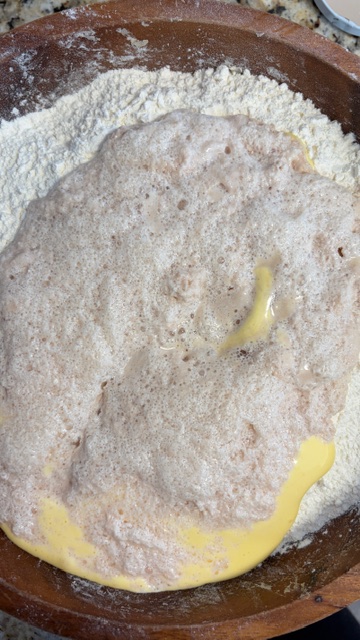
6. Knead.
Mix until dough forms. Knead 5–10 minutes by hand (or dough hook) until smooth and no longer sticky. Add flour a teaspoon at a time if needed.
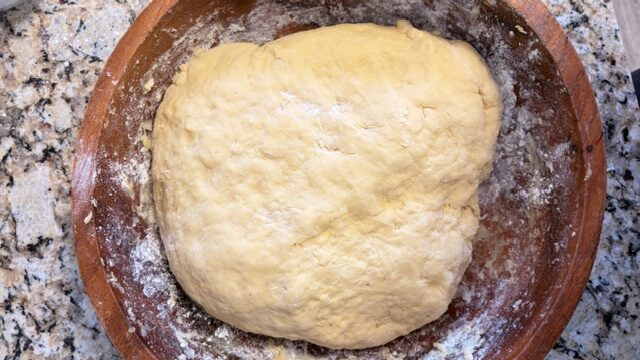
7. Let rise.
Cover bowl and let dough rest until fully risen, about 15–20 minutes (timing may vary).
8. Shape.
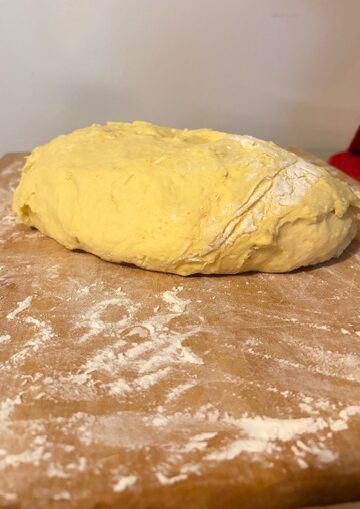
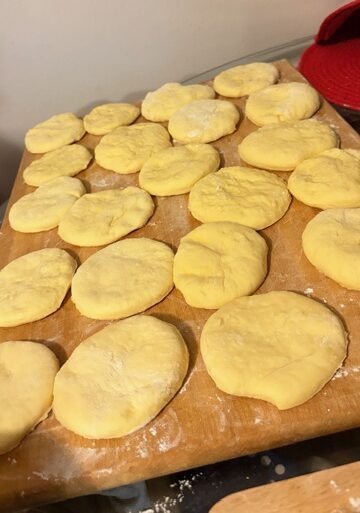
Roll out dough and cut into circles using a cutter or cup.
9. Fill and seal.
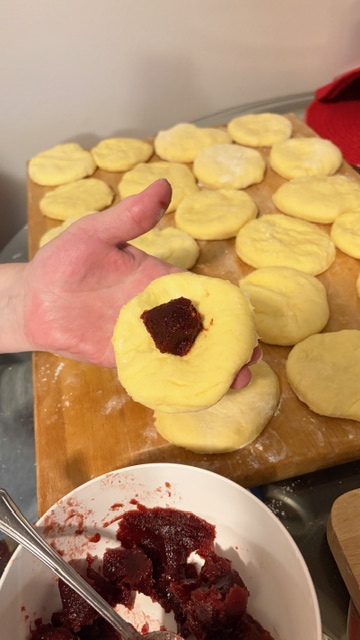
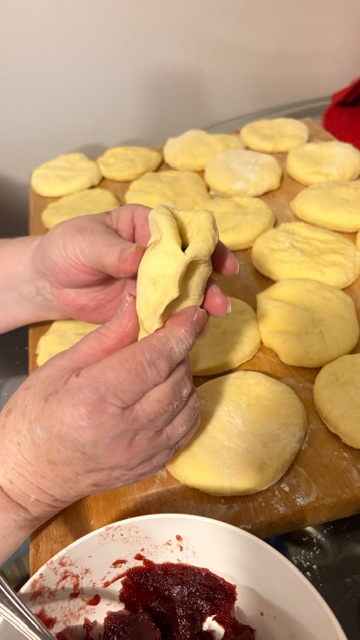
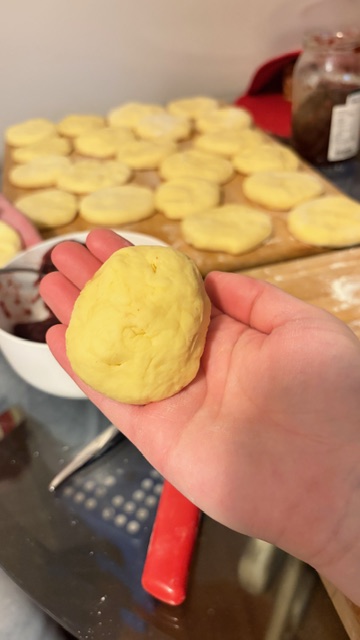
Place about 1 tablespoon marmalade in center of each circle. Seal edges tightly and shape into a smooth ball. Place on lined sheet.
10. Heat oil.
Heat oil in a large pot to 350°F (175°C).
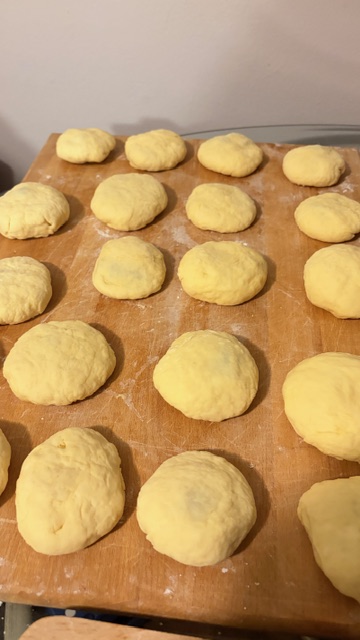
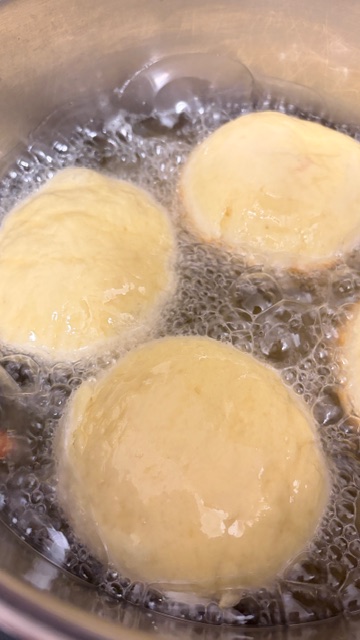
11. Place each donut in the hot oil and let them fry on each side for about 1 minute then flip for another minute or so.
12. Drain.
Remove and place on paper towels.
13. Dust.
Once slightly cooled, dust generously with powdered sugar.
Make Ahead & Storage
Make Ahead:
You can prepare the dough earlier in the day and let it rise in the refrigerator. Bring to room temperature before rolling and frying.
Storage:
Pączki are best the day they’re made. Store leftovers in an airtight container at room temperature for up to 2 days.
Freezing:
Freeze unfilled fried pączki for up to 2 months. Thaw and fill fresh for best texture.