Orange Olive Oil Layer Cake
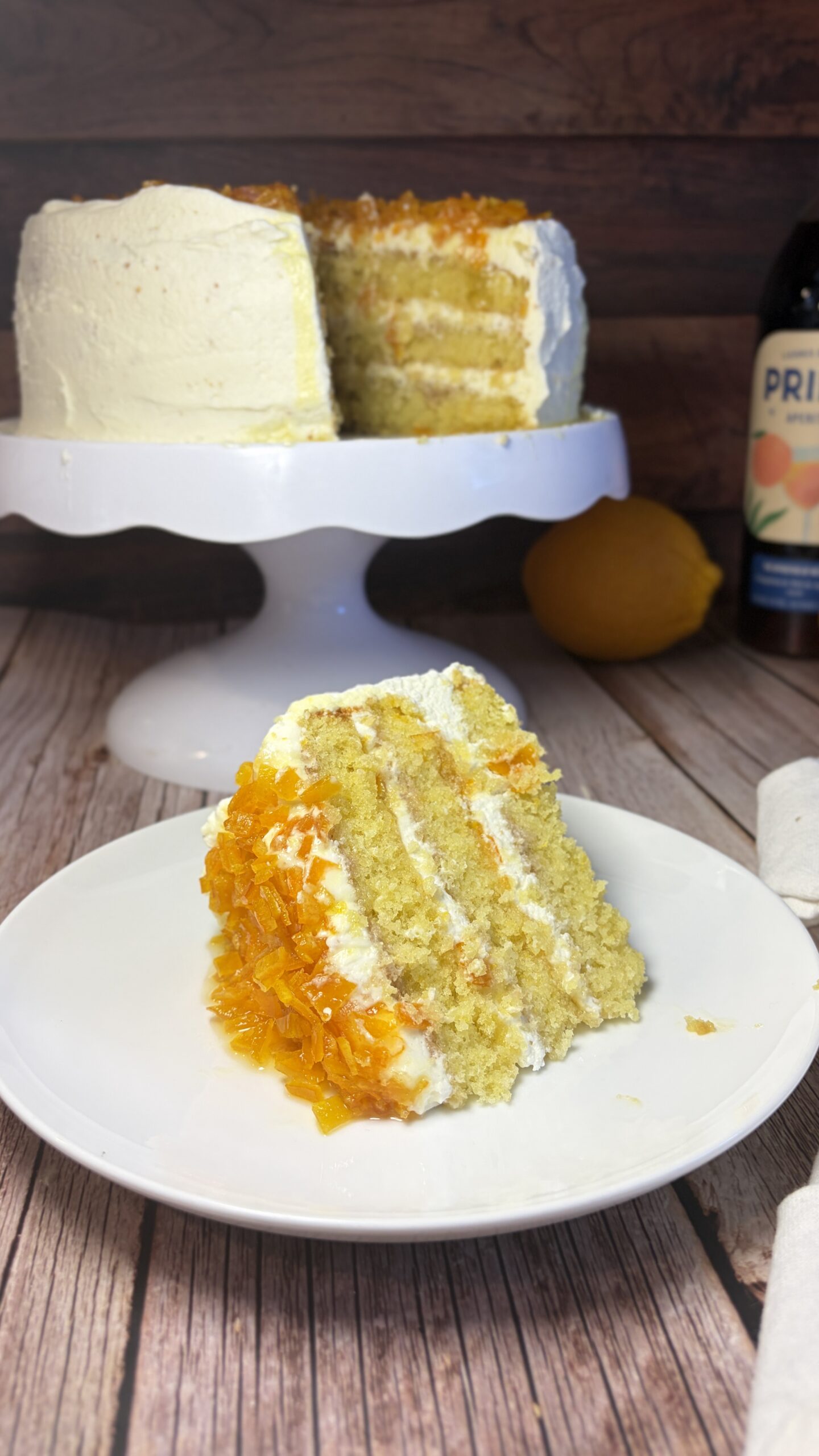
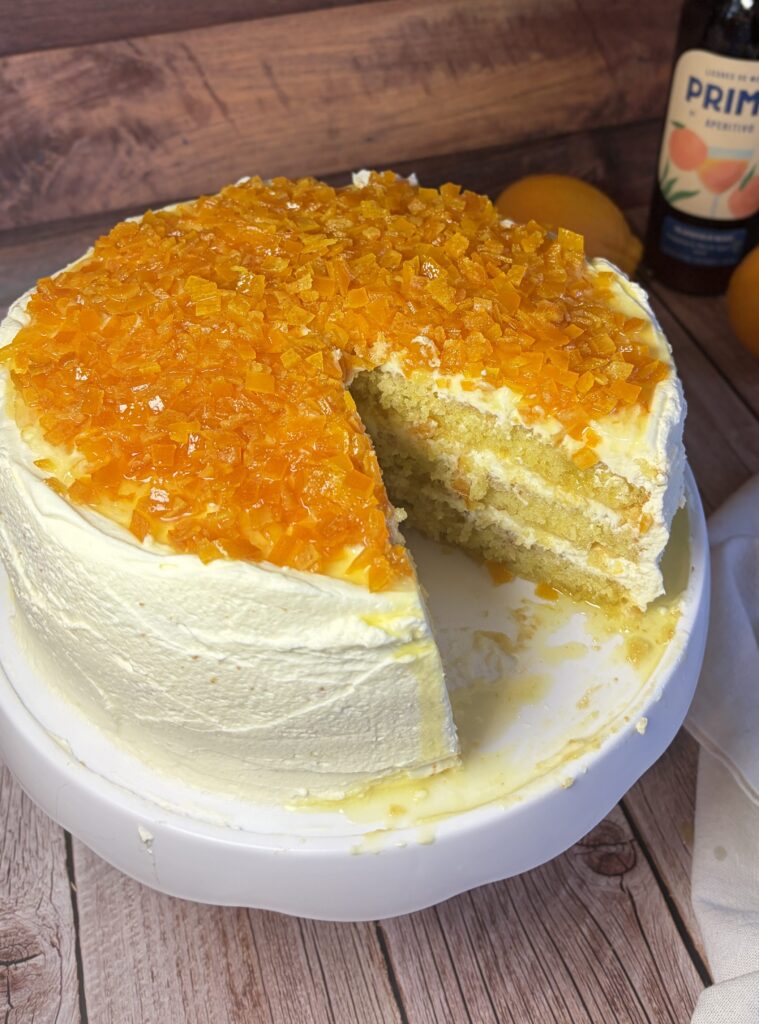
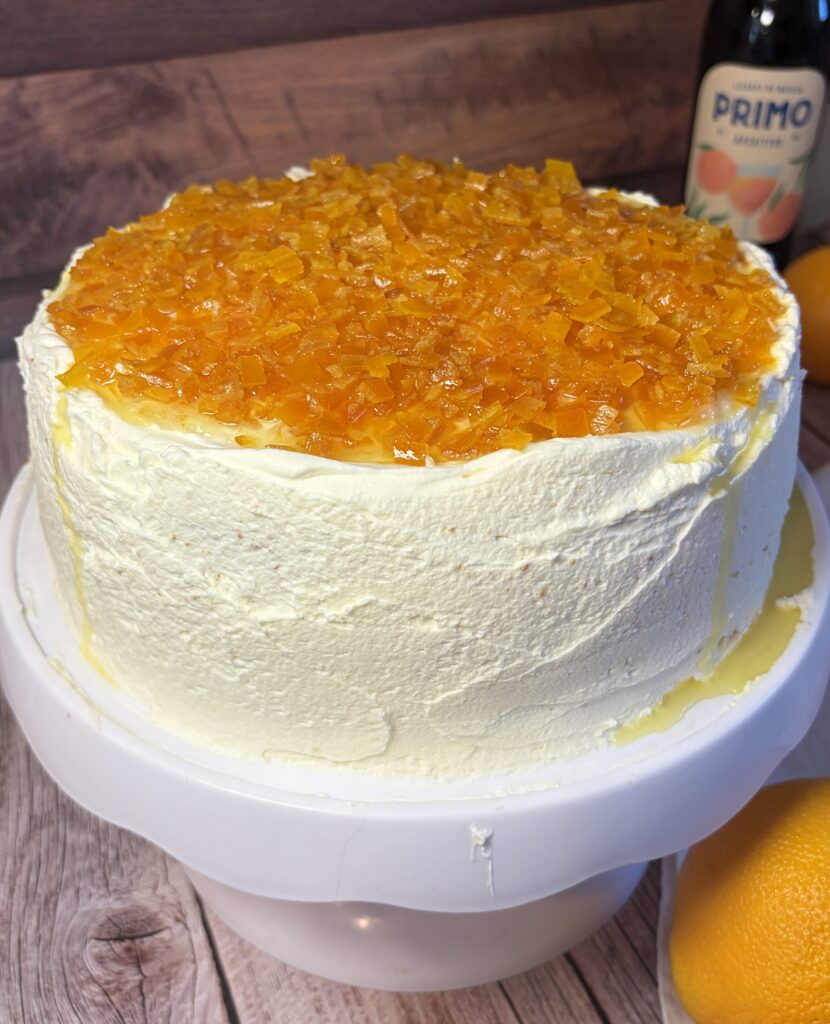
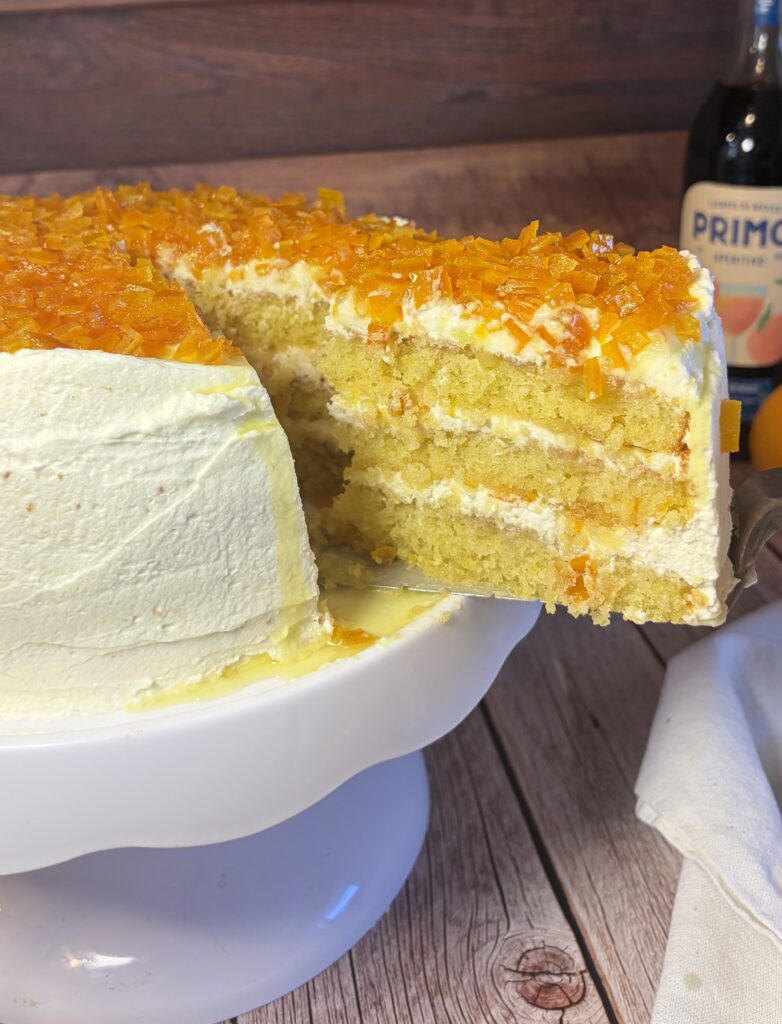
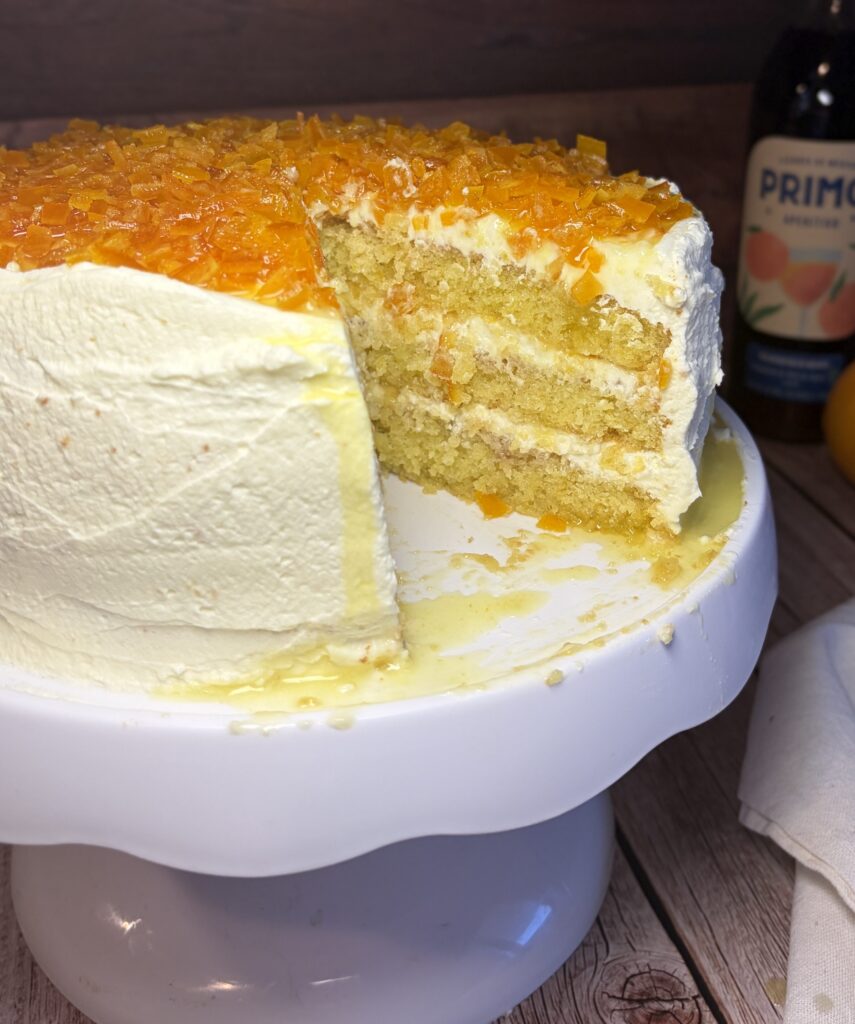
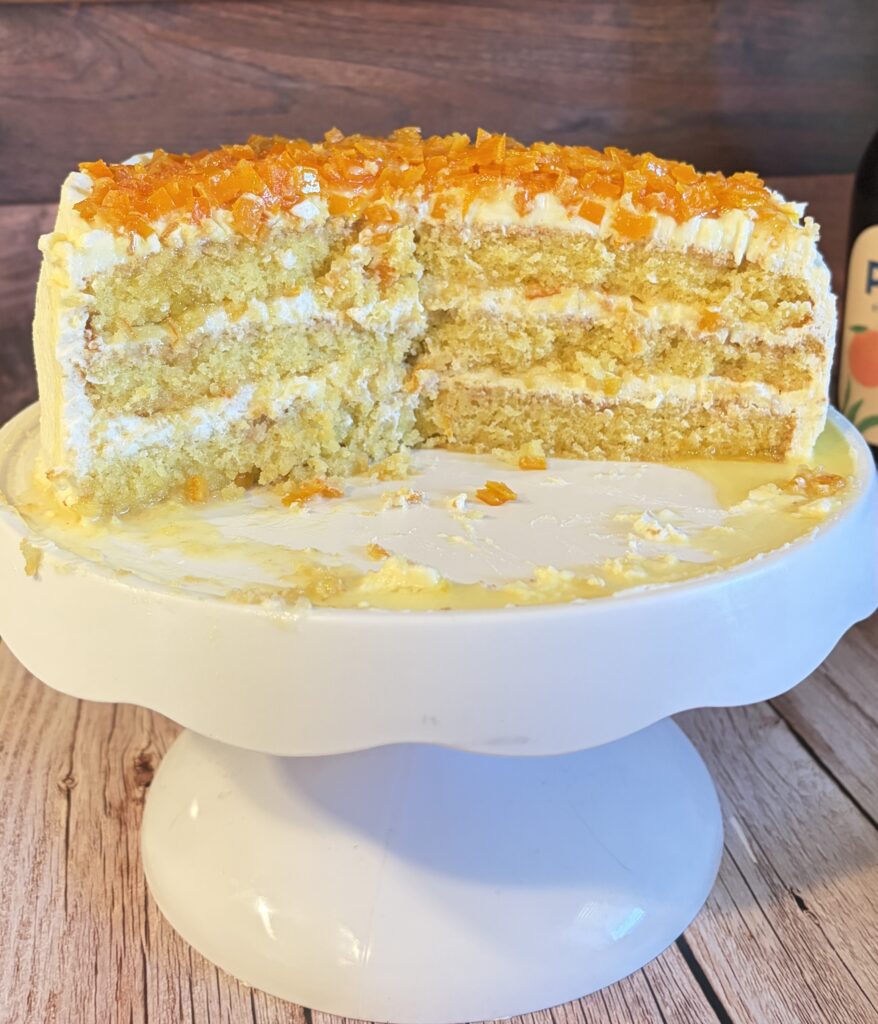
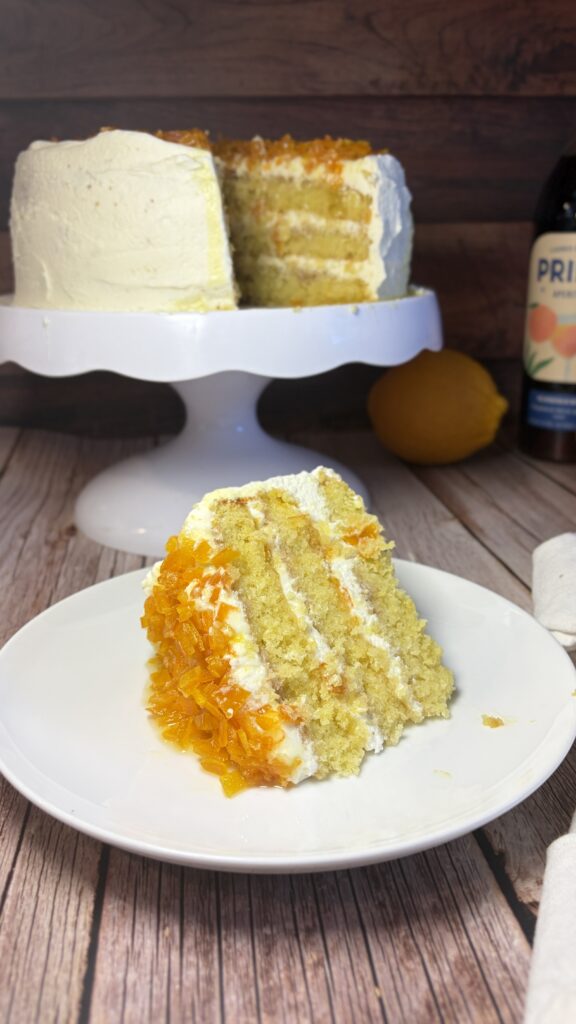
Bright citrus, fruity olive oil, creamy mascarpone, and a little aperitivo moment—this Orange Olive Oil Layer Cake is one of those cakes that looks impressive without being overly complicated. Three soft orange olive oil cake layers are brushed with a homemade Primo orange soak, layered with orange marmalade and fluffy mascarpone frosting, then finished with fresh orange for a simple but beautiful citrus cake.
The olive oil keeps the cake incredibly moist while fresh orange zest and juice give it plenty of real citrus flavor. The orange marmalade adds a sweet-tart layer between each cake, while the Primo soak brings in a slightly bittersweet orange note that makes the whole thing feel a little more special. Basically, she’s an orange cake with a very full résumé.
Why You’ll Love This Orange Olive Oil Cake
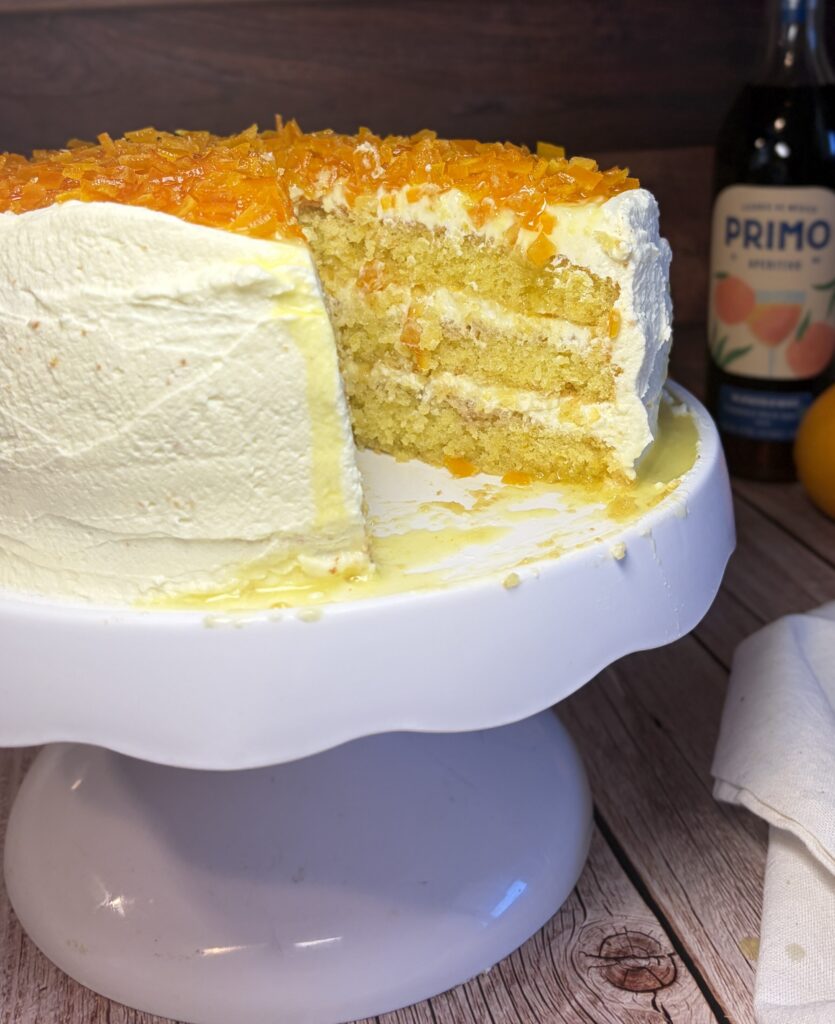
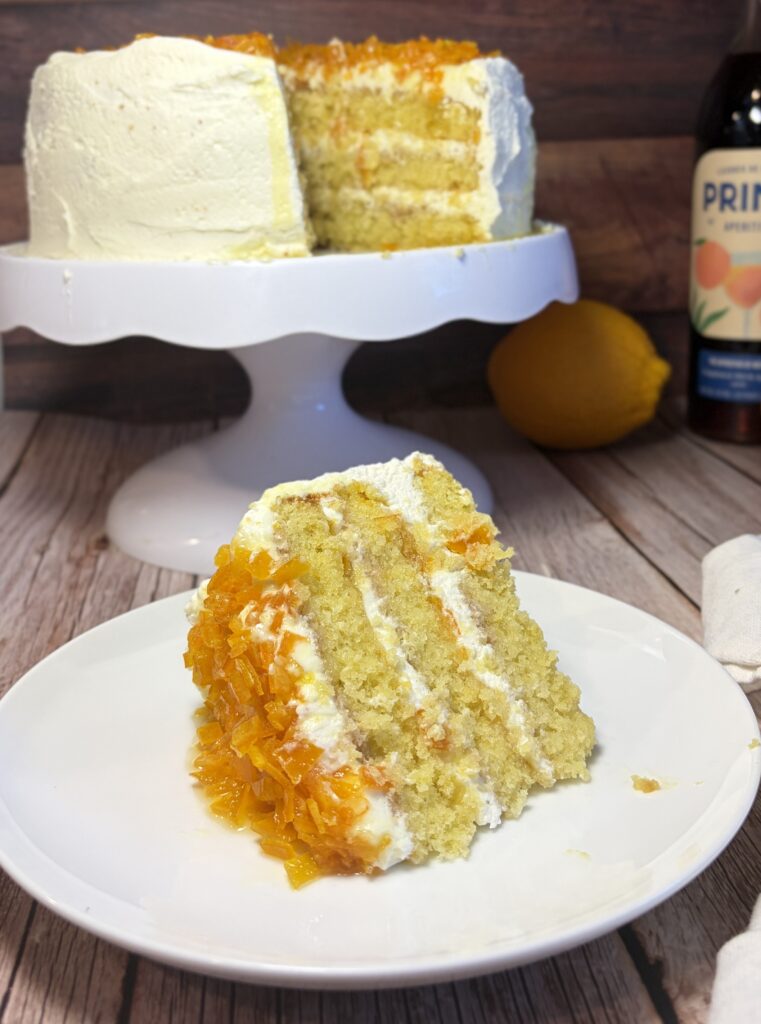
This cake is soft, moist, and full of fresh orange flavor without being overly sweet. Olive oil gives the layers a tender crumb that stays moist even after refrigeration, while the mascarpone frosting is light, creamy, and not nearly as heavy as a traditional buttercream.
The orange marmalade tucked between the layers gives you little pockets of concentrated citrus flavor, while brushing each cake with the Primo orange soak adds even more moisture and depth. It’s a beautiful cake for celebrations, dinner parties, birthdays, or anytime you want a layer cake that feels a little extra.
What You’ll Need
For the orange olive oil cake, you’ll need cake flour, baking powder, baking soda, fine salt, granulated sugar, fresh orange zest, eggs, extra-virgin olive oil, buttermilk, fresh orange juice, and vanilla extract.
For the Primo orange soak, you’ll need fresh orange juice, granulated sugar, and Primo aperitivo.
For the layers, you’ll need orange marmalade.
For the mascarpone frosting, you’ll need mascarpone cheese, heavy whipping cream, powdered sugar, vanilla extract, and salt.
To decorate, you can use thin fresh or candied orange slices, fresh orange zest, and chopped pistachios if desired.
Ingredient Notes
Extra-Virgin Olive Oil
Because olive oil is one of the main ingredients in this cake, use one that you genuinely enjoy the flavor of. A smooth, fruity extra-virgin olive oil works beautifully here. You want enough flavor to come through without choosing something so peppery or bitter that it overpowers the orange.
Fresh Oranges
Fresh orange zest and juice are doing a lot of the work in this recipe, so I definitely recommend using fresh oranges rather than bottled orange juice.
Rubbing the orange zest directly into the sugar before mixing the batter releases the natural oils from the zest and gives you a much stronger citrus flavor.
Buttermilk
Buttermilk adds moisture and just enough acidity to help create a soft, tender cake crumb.
Orange Marmalade
Orange marmalade makes the perfect filling for this cake because it adds concentrated orange flavor without requiring an additional homemade filling.
Spread it in a thin, even layer inside a ring of mascarpone frosting so it stays neatly contained between the cake layers.
Mascarpone
Keep the mascarpone cold until you’re ready to make the frosting. Mascarpone can become grainy or split if it gets too warm or is overmixed, so stop whipping as soon as the frosting holds medium-stiff peaks.
Primo Aperitivo
Primo adds a bittersweet citrus note to the orange soak and gives the cake a little more depth than orange juice alone.
Adding it after removing the syrup from the heat helps preserve more of its flavor.
Tips for the Best Orange Olive Oil Layer Cake
Make sure your eggs are at room temperature before starting the cake batter. They’ll incorporate more easily and help create a smoother batter.
Take the extra 30 seconds to rub the orange zest into the granulated sugar. It releases the aromatic oils from the zest and makes the entire cake smell and taste more orange-forward.
Once the flour goes into the batter, mix only until everything is combined. Overmixing can develop too much gluten and make the cake layers dense rather than soft and tender.
Use a digital kitchen scale to divide the batter evenly between your three cake pans. Equal amounts of batter mean evenly sized layers, which makes stacking the finished cake much easier.
Make sure the cake layers and Primo orange soak are completely cool before assembling the cake.
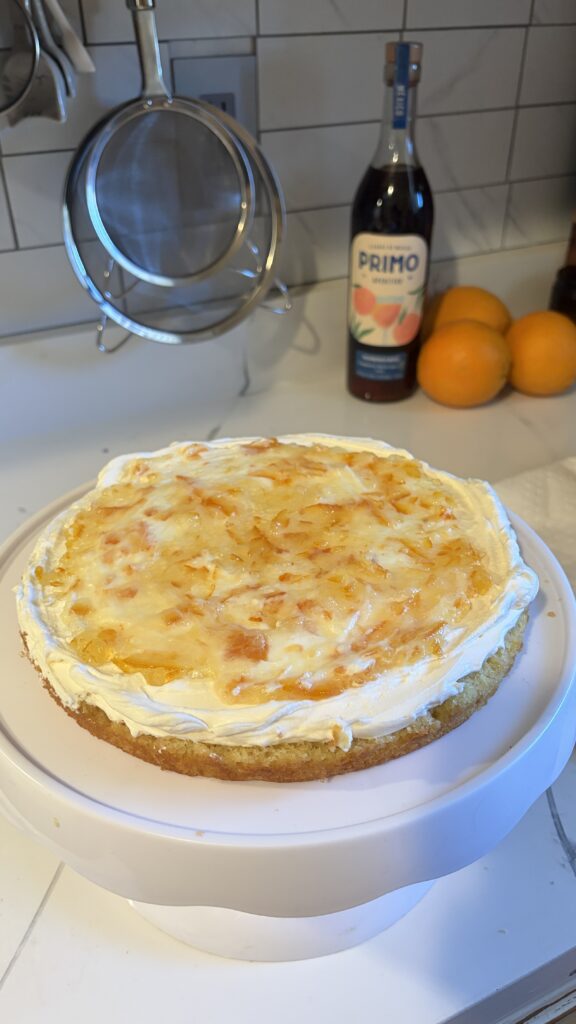
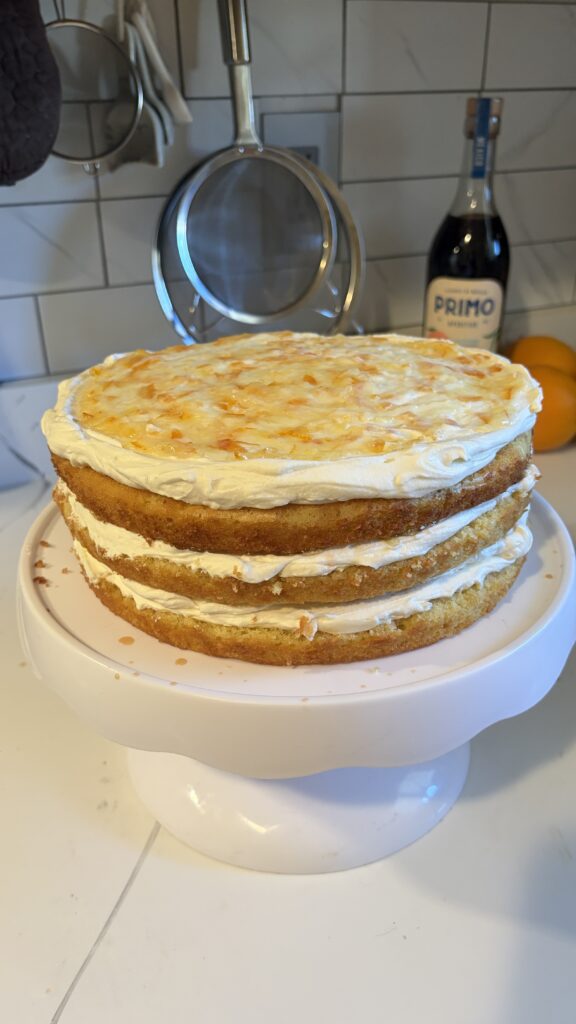
When adding the marmalade, pipe a ring of mascarpone frosting around the outside of each layer first. This creates a dam that keeps the marmalade from squeezing out once the cake is stacked.
How to Assemble the Cake
Place the first cake layer on a cake stand or serving plate and generously brush the surface with the cooled Primo orange soak.
Spread a thin layer of mascarpone frosting over the cake, then pipe a thicker ring of frosting around the outside edge to create a dam.
Spoon a thin layer of orange marmalade inside the frosting dam and gently spread it into an even layer.
Add the second cake layer and repeat with the Primo orange soak, mascarpone frosting, and orange marmalade.
Place the final cake layer on top and brush it lightly with the remaining soak before frosting the top and sides of the cake.
Once assembled, refrigerate the cake for 30 to 60 minutes before slicing. This gives the frosting and filling time to firm up and helps create cleaner slices.
Amazon Favorites for This Recipe
Some of the links in this post may be Amazon affiliate links, which means I may earn a small commission if you purchase through them at no additional cost to you. Using my links is a small way to support Bonia Bakery and helps me continue creating and sharing recipes like this one. Thank you so much for being here and supporting my little corner of the internet. 🤍
8-Inch Round Cake Pans: You’ll need three 8-inch round cake pans to create the three even layers in this cake.
Digital Kitchen Scale: One of my most-used baking tools. A kitchen scale makes measuring ingredients more accurate and is especially helpful for dividing the cake batter evenly between each pan.
Stand Mixer: Perfect for whipping the eggs, mixing the cake batter, and making the mascarpone frosting.
Zester: Perfect for finely zesting the oranges so you get all of that bright citrus flavor without any of the bitter white pith.
Parchment Paper: Lining the bottoms of your cake pans with parchment paper makes removing the baked layers much easier.
Offset Spatula: Perfect for spreading the frosting between the layers and smoothing the mascarpone frosting over the top and sides of the finished cake.
Frequently Asked Questions
Can I make the cake layers ahead of time?
Yes! The cake layers can be baked a day in advance. Once completely cool, wrap each layer tightly in plastic wrap and store them at room temperature overnight or refrigerate them.
Chilled cake layers are also much easier to frost and assemble.
What kind of orange marmalade should I use?
Use your favorite good-quality orange marmalade. Both traditional and bittersweet marmalades work well here, depending on how sweet you prefer your cake.
Can I use another jam instead?
You can, although orange marmalade complements the cake best because it reinforces the fresh orange flavor. Apricot preserves would also pair nicely with the olive oil and mascarpone.
Why did my mascarpone frosting become grainy?
Mascarpone frosting can split if the ingredients become too warm or if the frosting is overmixed. Keep both the mascarpone and heavy whipping cream cold and stop mixing as soon as the frosting reaches medium-stiff peaks.
Can I make this without Primo?
Yes, although it will change the flavor of the soak. You can replace the Primo with additional fresh orange juice for a simple orange soaking syrup.
Storage
Because this cake contains mascarpone frosting, it should be stored in the refrigerator.
Keep it covered in a cake container or loosely wrapped to prevent it from drying out. For the best texture and flavor, allow individual slices to sit at room temperature for about 15 to 20 minutes before serving.
The cake is best enjoyed within about 3 days.
Freezing
The unfrosted orange olive oil cake layers freeze beautifully.
Once completely cool, wrap each cake layer tightly in plastic wrap followed by foil and freeze for up to 2 months.
Thaw the layers overnight in the refrigerator before assembling. For the best texture, I recommend assembling the cake with the orange soak, marmalade, and mascarpone frosting fresh.
Orange Olive Oil Layer Cake
Orange Olive Oil Cake
Ingredients
- 2 1/2 cups (300 g) cake flour
- 1 teaspoon baking powder
- 1/4 teaspoon baking soda
- 3/4 teaspoon fine salt
- 1 1/2 cups (300 g) granulated sugar
- Zest of 2 large navel oranges
- 4 large eggs, room temperature
- 1 cup (200 g) extra-virgin olive oil
- 3/4 cup (170 g) buttermilk
- 1/4 cup (60 g) fresh orange juice
- 2 teaspoons vanilla extract
Primo Orange Soak
Ingredients
- 1/4 cup (60 g) fresh orange juice
- 2 tablespoons (25 g) granulated sugar
- 2 tablespoons (30 g) Primo aperitivo
For the Layers
- Orange marmalade, as needed
Mascarpone Frosting
Ingredients
- 454 g mascarpone cheese, cold
- 360 ml heavy whipping cream, cold
- 180 g powdered sugar
- 2 teaspoons vanilla extract
- 1/4 teaspoon salt
For Decorating
- Thin orange slices or candied orange slices
- Fresh orange zest
- Chopped pistachios, optional
Instructions
Make the Orange Olive Oil Cake
- Preheat the oven to 350°F. Grease three 8-inch round cake pans, line the bottoms with parchment paper, and lightly grease the parchment.
- In a medium bowl, whisk together the cake flour, baking powder, baking soda, and salt. Set aside.
- Add the granulated sugar and orange zest to the bowl of a stand mixer. Rub the zest into the sugar with your fingertips for about 30 seconds, until the sugar is fragrant and slightly orange in color.
- Add the eggs and beat with the whisk attachment on medium-high speed for about 2 minutes, until the mixture looks slightly pale and fluffy.
- With the mixer running on medium-low speed, slowly stream in the olive oil and mix until fully incorporated.
- Add the buttermilk, fresh orange juice, and vanilla extract. Mix just until combined.
- Switch to the paddle attachment, or finish mixing by hand with a silicone spatula. Add the dry ingredients in two additions, mixing on low speed just until no streaks of flour remain.
- Scrape down the sides and bottom of the bowl and gently fold the batter a few times to make sure everything is evenly combined. Do not overmix.
- Divide the batter evenly between the three prepared cake pans.
- Bake for 24–30 minutes, or until the centers spring back lightly when touched and a toothpick inserted into the center comes out clean or with a few moist crumbs.
- Allow the cakes to cool in the pans for 10 minutes, then carefully turn them out onto wire cooling racks. Let the layers cool completely before assembling.
Make the Primo Orange Soak
- Add the fresh orange juice and granulated sugar to a small saucepan over medium-low heat.
- Cook for 1–2 minutes, stirring occasionally, just until the sugar has completely dissolved.
- Remove from the heat and stir in the Primo aperitivo.
- Set aside and allow the syrup to cool completely.
Make the Mascarpone Frosting
- Add the cold mascarpone cheese, powdered sugar, vanilla extract, and salt to the bowl of a stand mixer fitted with the whisk attachment.
- Mix on low speed just until combined.
- With the mixer running on low, slowly pour in the cold heavy whipping cream.
- Increase the speed to medium-high and whip until the frosting is thick, fluffy, and holds medium-stiff peaks.
- Be careful not to overmix, as mascarpone frosting can become grainy or split.
Assemble the Cake
- Place the first cake layer on a cake stand or serving plate.
- Brush the top generously with the Primo orange soak.
- Spread a thin layer of mascarpone frosting over the cake, then pipe a thicker ring of frosting around the outside edge to create a dam.
- Spoon a thin layer of orange marmalade inside the frosting dam and gently spread it into an even layer.
- Place the second cake layer on top and repeat with the Primo orange soak, mascarpone frosting, and orange marmalade.
- Place the final cake layer on top and brush it lightly with the remaining Primo orange soak.
- Frost the top and sides of the cake with the remaining mascarpone frosting, using an offset spatula to smooth the frosting.
- Decorate with thin orange slices or candied orange slices, fresh orange zest, and chopped pistachios, if desired.
- Refrigerate the assembled cake for 30–60 minutes before slicing to help the layers and filling set.